Exception Spotting
( 05 / 12 )
( Brief )
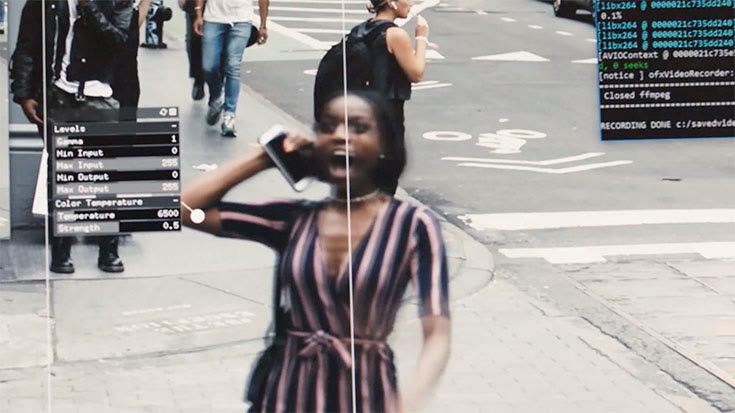
Fashion is such an electric and ephemeral thing that it’s almost undefinable. We cast leaders of fashion as oracles capable of divining what is exceptional, but even they are limited by their own biases. How can we truly know what exceptional fashion is? New Balance wanted to experiment with this idea at New York Fashion week 2018. So we created an AI-driven activation where pedestrians were analyzed in real-time and compared against local fashion data to try to find the truly unique. When a real exception stepped off the side walk as a normal person they landed onto their own personal 10 second catwalk as a star. The storefront lit up with their moving image broadcast for all to see, celebrating them as scientifically exceptional and truly fashionable.
( Role )
I acted as tech director, creative director and support dev for the project, guiding the client, agency and internal team through important considerations when implementing a computer vision system in the wild. The tech team consisted of myself and one other dev who specializes in openFrameworks. The biggest problems I guided the team in solving were how to efficiently and reliably represent fashion from video data captured in the wild, how to efficiently and reliably detect attire on pedestrians in real time and how to plan the environment and construct the system to perform fast enough to keep up with the brisk walking pedestrians of NYC.
( Notes )
During the annual week in New York that spotlights fashion trends, New Balance wanted to celebrate individuals who are expressing themselves in independent and distinctive ways. New York Fashion Week provided the background to generate excitement for the Fresh Foam Cruz Nubuck shoe. We created real-time exception spotting technology that scanned crowds of people, gathered inputs, and identified the anomalies and exceptions to the norm. In the week leading up to the activation on September 6, computer vision technology captured statistics about fashion choices of thousands of pedestrians in New York's Soho neighborhood. On the day of the event, this data was used to identify who the exceptions to the norm were.For the activation, we set up a camera on a corner in Soho that constantly streamed its video into an AI system that analyzed the clothing.The computer vision technology followed a series of steps: 1. It detected human figures, and cut each detected person into a separate image. 2. Used facial detection to determine whether the person was facing the camera or not. We didn't want people missing the experience as they passed by! 3. The technology then found the person's hips, shoulders, and knees to cut out images of body regions to identify different articles of clothing. For example, the shoulders to the hips would be a person's top. 4. The images were sent through a a set of style detection models to determine color, pattern, shape, and more.5. These results were then compared with the data gathered the week before the event to determine how uniquely dressed the person was.The computer vision technology recognized details like patterns, styles, and accessories, as well as colors and shapes. Unlike editorial street photography, the technology removed bias from finding the individuals who stood out from the crowd. During the real-time activation, the pedestrians identified as unique were broadcast on a large screen and given a pair of New Balance sneakers.